
Jack County Arrest Warrants Explained
In Jack County, an arrest warrant is a written order from a magistrate telling a peace officer to take a person into custody. Texas Code of Criminal Procedure art. 15.01 spells that out. The order comes from a court or magistrate tied to the case, never from the sheriff's public website. It names the accused, or gives a reasonably clear description, and states the offense charged. Probable cause sits behind it, usually in a complaint or affidavit. What the paper does is authorize an arrest and a prompt appearance before a magistrate. It decides nothing about the case itself. Before you act on any record or report in Jack County, ask the issuing court for the cause number and the warrant's current status.
Jack County Arrest Warrants Use Several Courts
Which court holds a Jack County warrant depends on the charge. Felonies route through the 271st Judicial District Court, which serves Jack and Wise Counties from its primary location in Decatur, while the District Clerk keeps district filings in Jacksboro. County misdemeanors belong to Jack County Court and the County Clerk. JP and municipal judges handle lower-court process according to the charge and procedure. Prosecution is a separate job. The County Attorney prosecutes misdemeanors in county and justice courts but is not a neutral records desk. Start with the clerk named on the case, then turn to the Sheriff's Office or Jacksboro Police only for service or custody routing.
Inside a Jack County Arrest Warrant
A Jack County warrant can carry several identifying details: the person's name, the offense, the issuing magistrate, a signature, the date, and the cause number, plus the command to a peace officer. Related papers may include a complaint or probable-cause affidavit, a service return, and bond or magistrate-warning information. The filing clerk can tell you which of those items exist in a specific case.
| Case identifier | Cause number, where filed; no Jack County warrant-number format was verified. |
|---|---|
| Person and offense | Name or description and the law alleged to have been violated. |
| Issuing official | Magistrate or judge name, title, office, and signature. |
| Issue and service | Issue date, executing agency, return or execution date, if recorded. |
| Bond details | Case-specific amount, conditions, or no-bond status; confirm with court or counsel. |
| Supporting paper | Complaint or affidavit, subject to access timing and any separate restriction. |
Jack County Arrest Warrant Copies After Execution
Once a warrant has been executed, the paper trail opens up. Code of Criminal Procedure art. 15.26 makes an arrest warrant and its supporting affidavit public information, and the magistrate's clerk must let you inspect the copy during normal business hours from that point forward. Copy charges may apply. The rule has limits, though. It does not open every investigative record or wipe away sealing and confidentiality rules. Juvenile, family-protective, and sealed matters need special care, and a lawyer can advise what may be requested. Ask the clerk in Jack County for the document and the correct case number. The Texas Attorney General's ruling explains the public-copy rule, and the AG's explanation of arrest-warrant access spells out how it works.
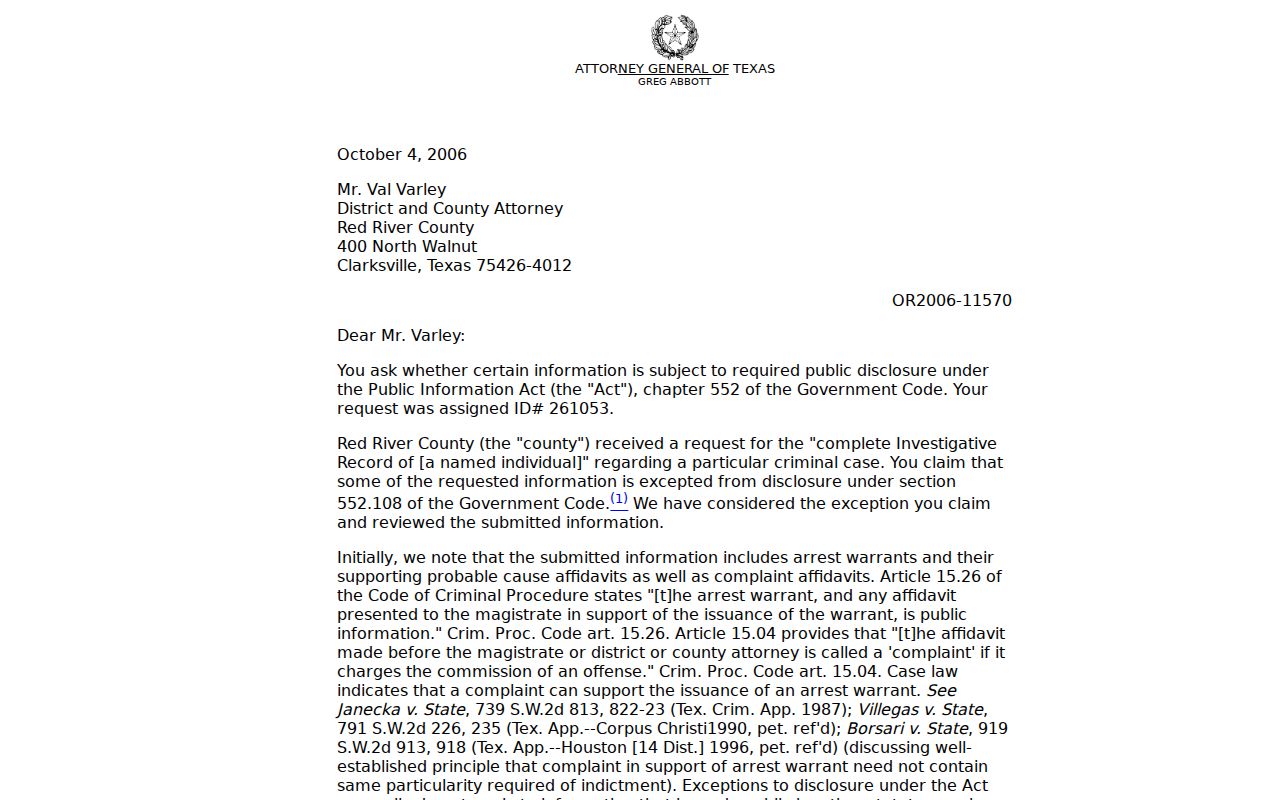
That public-access clock starts only for an executed warrant and its affidavit in Jack County, not for a live countywide search list.
Serving Arrest Warrants in Jack County
Several officers can execute a warrant in Jack County. The Sheriff's Office, a county constable, Jacksboro Police, and other authorized peace officers all may serve the order, and which agency does can depend on the case. Texas law then requires prompt presentation before a magistrate, who handles warnings and bond. Call the sheriff's dispatch line at (940) 567-2161 for operational routing, or Jacksboro Police at (940) 567-2666 for city-police process. The sheriff's public site posts no warrant list or update schedule. For legal status, go back to the issuing court.
Jack County Warrant Service Record
Two offices can tell two different stories about the same warrant. In Jack County, the sheriff or constable may record execution and return details, while a clerk records court action, a recall, bond, or the next setting. Ask each office for the record it keeps, and hold on to the date of any court order or receipt. One thing a sheriff phone call cannot do is clear you. Only the issuing judge or court decides whether a warrant is recalled, quashed, or still in force. If the case belongs to another county or a federal court, Jack County officers cannot touch that outside order.
Comparing Arrest, Summons, and Bench Warrants
Texas procedure lets a magistrate issue more than one kind of paper. A summons calls a person to court. An arrest warrant commands a peace officer to take someone into custody. A bench or FTA warrant follows a missed obligation. In Jack County, the issuing court decides which paper applies and how to respond to it.
| Feature | Arrest Warrant | Summons | Bench Warrant |
|---|---|---|---|
| What it orders | Arrest and presentation to a magistrate | Appear on the stated date | Arrest after a court obligation was missed |
| Why issued | Probable cause tied to an alleged offense | Court process without immediate custody | Failure to appear or comply |
| Jack County source | Issuing magistrate and case clerk | Issuing court or clerk | JP, municipal, County, or district court |
| Response | Confirm status and bond with counsel | Attend as directed | Ask court about appearance, recall, or bond |
Jack County Search Warrants Are Separate
A search warrant is a different animal. Under Code of Criminal Procedure Chapter 18, it authorizes officers to search a place for specified property or evidence after a probable-cause review. It is not an arrest warrant for a person, and it will not tell you whether someone in Jack County has an outstanding court order. After execution, the supporting affidavit may become available through the clerk, subject to statutory exceptions. Because the warrant targets a place or evidence, treat it as separate from any personal warrant lookup. Texas Code of Criminal Procedure Chapter 18 sets out the full search-warrant rules.
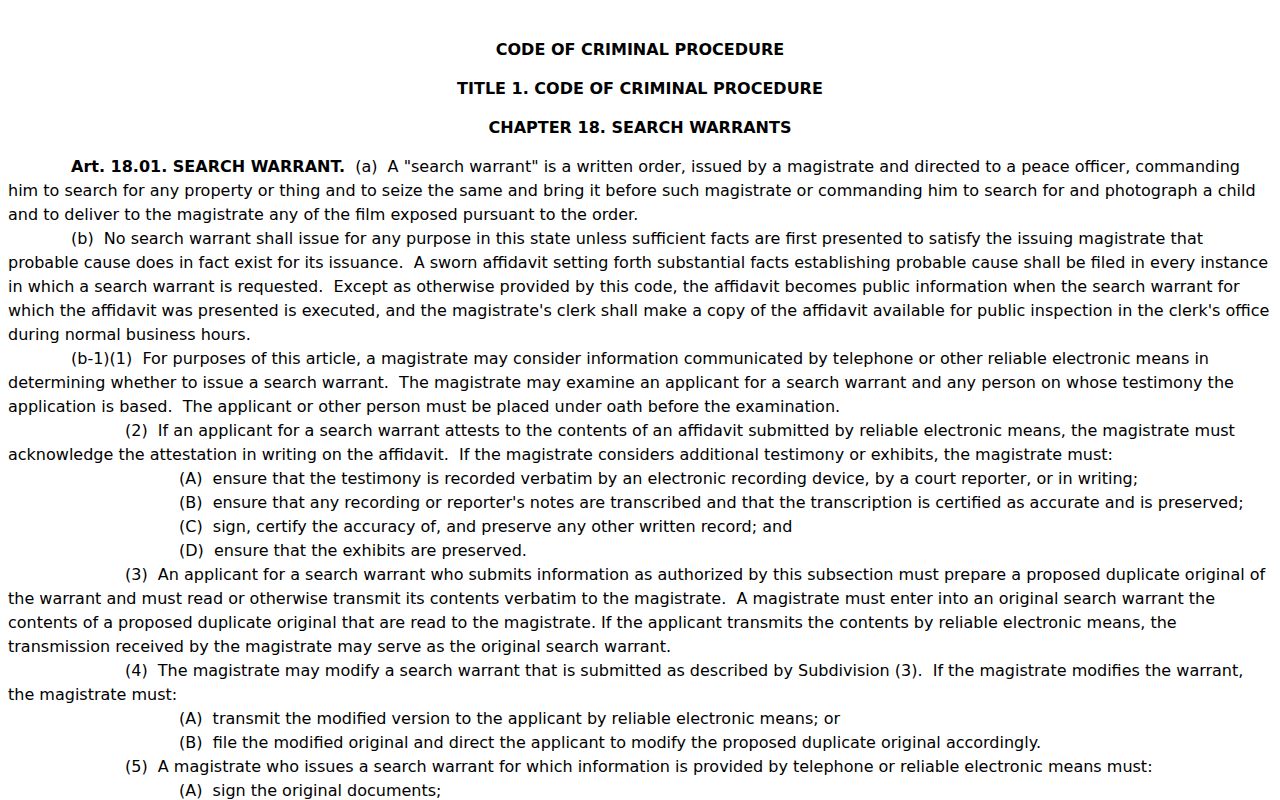
Keep those records apart from the court process for arrest or failure to appear.
If There’s an Arrest Warrant for You
If a Jack County warrant names you, start with the issuing clerk. Ask for the cause number, the offense level, whether the warrant is active, and the bond or no-bond entry. Then talk with a Texas criminal-defense attorney about a motion, a counsel appearance, bond, or a planned surrender. The sheriff's jail number covers custody logistics only, not general warrant clearing.
Important: Confirm the issuing court and get legal advice before surrendering; only the court can recall or quash an arrest warrant.
The Jack County court-first resolution steps cover the local clerk and sheriff sequence.
Jack County Arrest Bond Comes From Court
No bond chart or surrender form is posted for Jack County, so the amount comes from the court or magistrate case by case. Cash, surety, personal recognizance, and no-bond each carry different obligations. A chart could never tell you which one a judge will pick. The Jack County clerk or your lawyer can show you the order for your case, how payment is accepted, and the next court date. Texas courts publish bail and pretrial resources, but that page is not an active warrant search.
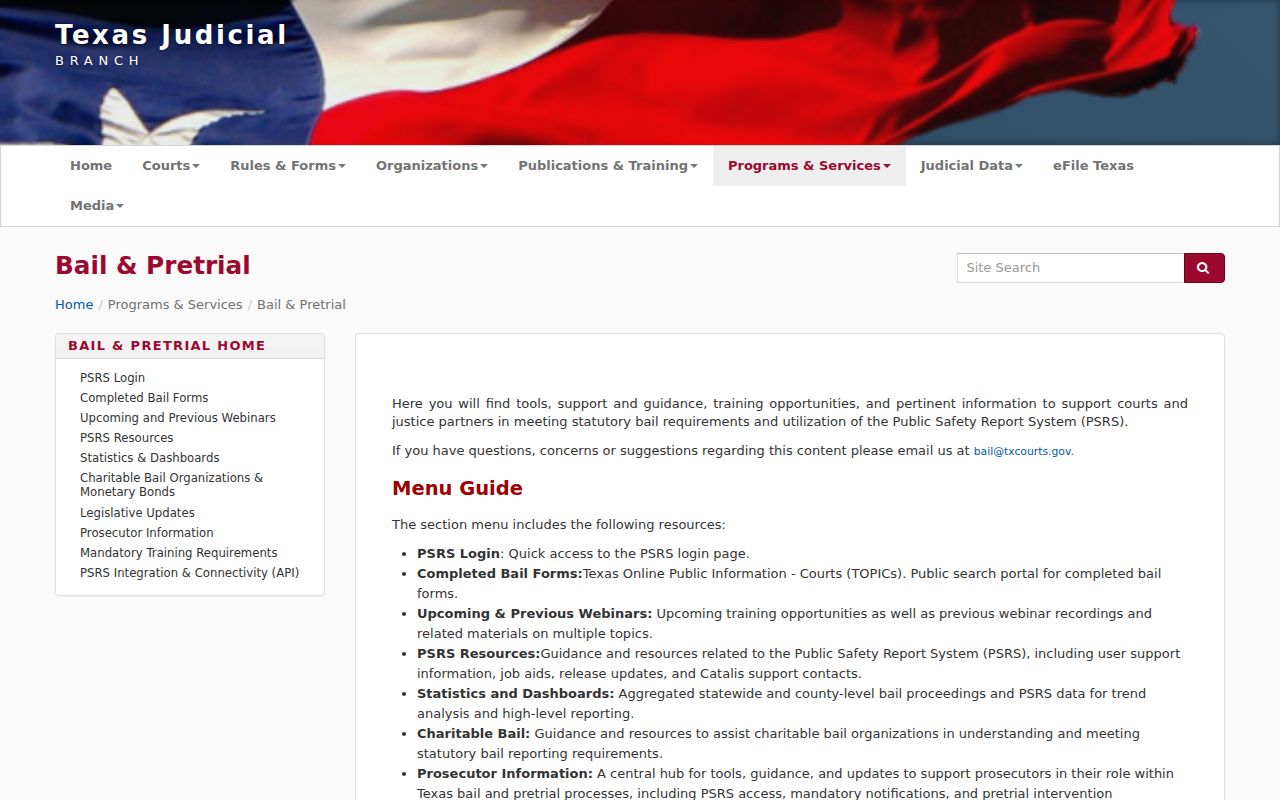
The court’s case-specific instructions control the amount, conditions, and release steps.